Rosemary Focaccia
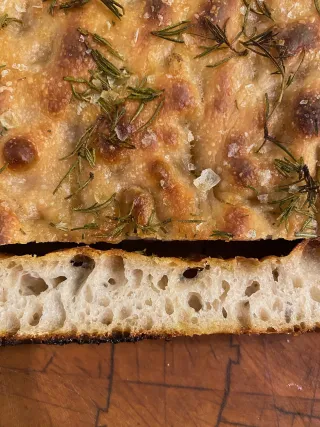
A golden, crisp-bottomed focaccia with a light, bubbly crumb, dimpled with olive oil, fresh rosemary and flaky sea salt. No kneading required.

Focaccia is the easiest impressive bread you can bake. There is no kneading and no shaping: a very wet dough is folded a few times in the bowl, left to rise in an oiled pan and dimpled with your fingers before baking. The result is golden and crisp on the bottom, light and full of bubbles inside, and fragrant with olive oil, rosemary and sea salt.
Why this recipe works
- A wet dough. High hydration produces the large, irregular holes that make focaccia so light.
- Stretch and fold. Lifting and folding the dough over itself a few times builds strength without kneading.
- Plenty of olive oil. Oil in the pan essentially fries the base, giving a crisp, golden crust.
- Dimpling. Pressing deep dimples into the risen dough creates pools for the oil and stops the bread from rising into a dome.
Overnight focaccia
For more flavor and a more open crumb, after the folds, cover the bowl and refrigerate for 8 to 24 hours. Then transfer the dough to the oiled pan and let it rise at room temperature for 2 to 3 hours before dimpling and baking.
Topping ideas
- Cherry tomatoes and olives pressed into the dimples
- Thinly sliced red onion and thyme
- Garlic slices and grated Parmesan
FAQ
Can I use all-purpose flour?
Yes, though the dough will be a little slacker and the crumb slightly less chewy. For a classic sandwich loaf, try our homemade white sandwich bread.
Rosemary Focaccia
Ingredients
Conversions are rounded for convenience. For baking, use the original measurements where possible.
Instructions
-
In a large bowl, stir together the flour, fine salt and yeast. Add the warm water and stir with a spatula until no dry flour remains. The dough will be very sticky.
-
Cover and let rest for 30 minutes.
-
With wet hands, grab one side of the dough, stretch it up and fold it over the center. Turn the bowl and repeat 4 times. Cover and rest for 30 minutes. Repeat this set of folds two more times, 30 minutes apart.
-
Pour 3 tablespoons of the olive oil into a 9 x 13-inch (23 x 33 cm) metal pan and spread it over the base and sides. Tip the dough into the pan and turn it once to coat with oil.
-
Cover and let rise for 1 to 1½ hours, gently stretching the dough toward the corners halfway through, until puffy and bubbly. Heat the oven to 450°F (230°C, or 210°C (410°F) fan, gas mark 8).
-
Drizzle with the remaining oil. With oiled fingers, press deep dimples all over the dough, right to the bottom of the pan. Scatter with rosemary and flaky salt.
-
Bake for 22 to 28 minutes, until deep golden on top and crisp underneath.
-
Let it cool in the pan for 5 minutes, then transfer to a wire rack. Serve warm or at room temperature.
Notes
- A metal pan gives a crisper base than glass or ceramic.
Tips
- Use wet hands to handle the dough; it will not stick.
Substitutions
- Herbs: thyme, oregano or sage instead of rosemary.
- Round pan: divide between two 9-inch (23 cm) round cake pans and bake for 20 to 25 minutes.
Storage and reheating
- Best on the day it is baked. Keep wrapped at room temperature for up to 2 days and re-crisp in a hot oven for 5 minutes.
- Freeze for up to 3 months.
Reviews
No reviews yet. Made this recipe? Be the first to share how it went.
Leave a review
You might also like

Bread & Rolls
Homemade White Sandwich Bread

Breakfast & Brunch
Cinnamon Rolls

Bread & Rolls
Buttermilk Biscuits

Pies & Cheesecakes